Age Calculator
Calculate your age in years, months and days from your date of birth.
Your age on
- Total calendar days
- Completed weeks
- Completed months
Hours and minutes
These totals convert calendar days using 24 hours per day and 60 minutes per hour. They do not include birth time, time zones or daylight-saving changes.
Calendar method: completed months, with month-end dates clamped to the last valid day. February 29 birthdays use February 28 in non-leap years. See the method.


Calculate your age today or on another date
This age calculator finds the calendar time between your date of birth and a selected date. The main answer shows completed years, months and remaining days. You can also see total calendar days, completed weeks and completed months.
Use today’s date to answer “How old am I?” or choose another date to find your age on a past event or a future birthday. The calculator also shows the weekday you were born and the next birthday on or after your selected date.
How to use the age calculator
- Enter your date of birth.Use the date picker or type a valid date.
- Choose the target date.Leave today’s date selected, or enter a past or future date that is on or after your birth date.
- Select Calculate age.Read your calendar age and the compact totals below it.
Select Use todayto return the target date to today and calculate again. Select Resetto clear your birth date and results.
How is age calculated?
Calendar age follows calendar months and birthdays. A month can contain 28, 29, 30 or 31 days, so dividing the number of days by 30 does not reliably give an age in months.
This calculator first finds the largest number of complete months between the two dates. Each month anniversary is measured from the original birth date. If that day does not exist in the destination month, the anniversary falls on that month’s last day. It then converts those completed months into years and months, and counts the remaining days.
Twelve completed months make one year. Days are counted from the last completed month anniversary to the selected date.
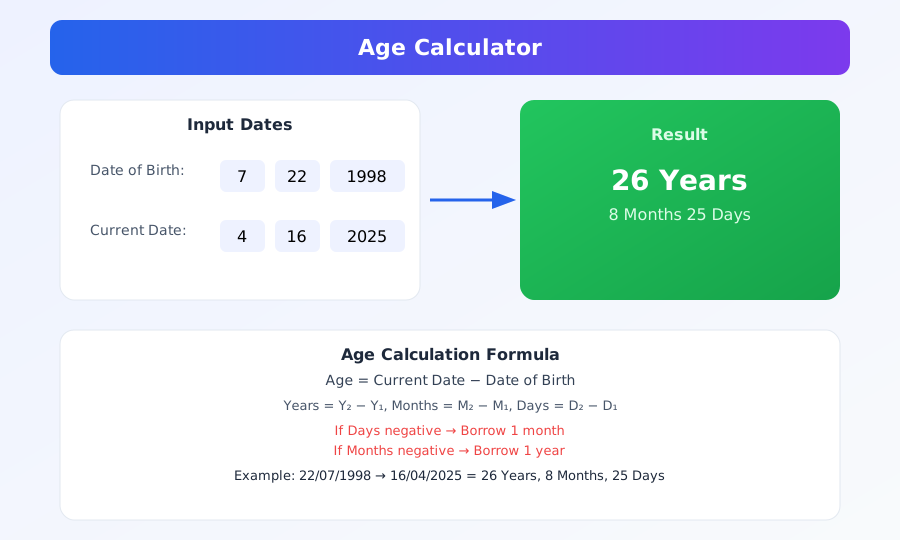
For example, from 15 January 2000 to 20 September 2026, there are 320 complete months. That is 26 years and 8 months, followed by 5 more days. The answer is 26 years, 8 months and 5 days.
Age calculation examples
| Date of birth | Age on date | Calendar age |
|---|---|---|
| 1 Jan 2000 | 1 Jan 2025 | 25 years, 0 months, 0 days |
| 10 Apr 2000 | 9 Apr 2025 | 24 years, 11 months, 30 days |
| 15 Jan 2000 | 20 Sep 2026 | 26 years, 8 months, 5 days |
| 29 Feb 2000 | 28 Feb 2025 | 25 years, 0 months, 0 days |
| 31 Jan 2025 | 28 Feb 2025 | 0 years, 1 month, 0 days |
Leap years and February 29 birthdays
A leap year adds February 29 to the calendar. In the Gregorian calendar, years divisible by 4 are leap years, except century years that are not divisible by 400. For example, 2000 was a leap year, but 2100 will not be.
For someone born on February 29, this calculator uses February 28 as the anniversary in a non-leap year and February 29 in a leap year. This convention also applies to the next-birthday result.
Some calculators use March 1 instead. That can produce a different answer around the birthday. For an official age requirement, check the convention specified by the relevant organization.
Why calendar age and total days are different
Calendar agedescribes time in years, months and days. Total calendar dayscounts date boundaries between the two dates. The birth date itself does not add an extra day: the same start and end date gives zero days.
Completed weeksis the total day count divided by 7, rounded down. For example, 10 days equals 1 completed week with 3 days left over. Completed monthsuses month anniversaries, not an average month length.
Hours and minutes are shown only as conversions of the day count. Without a birth time and time-zone information, they should not be read as your exact elapsed lifetime.
Finding your age on a future date
Enter your date of birth and choose the future date in Age on this date. This is useful for checking your age at an event, planning a birthday or comparing dates. The next-birthday panel is relative to that selected date, not necessarily today.
The calculator uses dates from year 1 through year 9998, applies Gregorian calendar rules throughout, and does not model historical regional calendar changes.
Why is Age important?
Age is important for many reasons because it helps us understand and organize different aspects of life. Here’s why age matters:
Personal Growth
Age helps track life stages like childhood, teenage years, adulthood, and senior years.
Healthcare
Doctors use your age to suggest check-ups, vaccines, and treatments at the right time.
Education & Career
Schools admit students and place them in grades based on age. It also affects career planning.
Work Eligibility
Many jobs and roles require a minimum age to apply or participate.
Legal Rights
Important rights—like voting, driving, or drinking—depend on your age.
Family Roles
Age helps define roles in a family—whether you’re a child, parent, or grandparent.
In short, age helps us make sense of life and the world around us! 😊
FAQ on Age Calculator
Enter your date of birth, leave the target date set to today and select Calculate age. The main result shows your completed years, months and remaining days.
Yes. Choose a future date in Age on this date. The target date must be on or after your birth date, and the supported target years run from 1 through 9998
This calculator treats February 28 as the anniversary in non-leap years and February 29 in leap years. Other conventions, such as March 1, can give different results near the birthday.
Calculators may use different rules for month-end dates and February 29 birthdays. Some use average month lengths. This calculator counts complete calendar months from the original birth date and clamps an unavailable day to the end of the destination month.
No. They convert the calendar day count using 24 hours per day and 60 minutes per hour. This tool does not collect birth time or account for time-zone offsets and daylight-saving changes.
The calculator code on this page processes the entered dates in your browser. It does not send or save those values. The website’s separate analytics and advertising services are covered by its privacy policy.